
What is Kiswa? It's Importance, Cost & How Often Does it Change on the Kaaba?
By Dua Travels
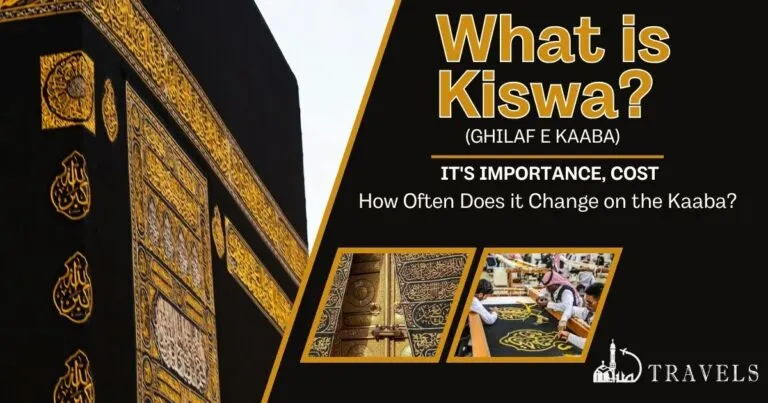
Table of Contents
The holiest structure of Islam that is positioned within the boundaries of Haram in Makkah, the Holy Kaaba is covered with a pious cloth named as Kiswa (Ghilaf-e-Kaaba). The entire Muslim Ummah feels bestowed while facing the Kaaba and performing their religious rituals in order to gain blessings and guidance of the Almighty. One of the most prominent features of this religiously uplifted structure is the holy cloth that covers it. It is the admirable cloth colored in black with golden ingrainings of Arabic verses.
What is Kiswa?
This cloth of the Holy structure is the sacred black cloth delicately embroidered with the black textile that veils the Kaaba. This beautiful cloth is a monument of Islam symbolising the greatness of the Master Almighty and Faith that the entire Ummah holds. It is more than just a covering material, made with the premium Egyptian silk and fabricated with gold and silver threads. The word Kiswa (كِسْوَة) obtained from the Arabic language which means “to cover” or “to veil”, which highlights its property of covering the entire cubic structure, performing its role as a sacred cloth for the most religious site.
What is Written on Kiswa of Kaaba
The beautiful kiswa is ingrained with Quranic Ayats including Shahada, Ayat al-Kursi, and the 99 names of Allah. These all beautiful verses are hand-embroided with sparkling calligraphy with gold and silver. Pilgrims from all around the world visit the core of Makkah to admire the delicate work of embroidery engraved in the Kiswa.
The Shahada: "La ilaha illallah, Muhammadur rasulullah"
Ayat al-Kursi (Surah Al-Baqarah, 2:255)
The Thirteen Attributes of Allah (Surah Al-Hashr)
The pious name of SWT and his beloved Last Prophet (PBUH)
These writings on the cloth are hand-embroidered which run vertically along the panels of the sacred cloth.
The Religious Importance of the Kiswa
This premium material of this cloth uplifts the appearances of Kaaba with the beautiful work done on it which highlights the years of struggles and hard work performed by the crafters while making it. This cubic structure holds great influence and strength as it draws an ideal connection and reference of the previous era when Islam just started spreading. The performing Umrah mainly acts as a symbol of remembrance as the pilgrims face the direction of Kaaba while performing the rituals as well as Salah. This religious cloth stands as the unifying dignity wrapping the entire cubic structure in honor and faith. The sacred piece of cloth covering the stone structure that centers the holy city Haram, holds great significance. There are various believers who eagerly wish to touch the pious Kiswa. Before the Hajj, the lower white part of the Kiswa is folded for almost 3 meters from all 4 sides and is covered with the 2 meter wide cotton fabric to secure the purity of the Holy structure.
Did You Know:
In the Holy city, every year as the sacred time of Dhu-al-Hijjah arrives, millions of believers during their Hajj rituals move from the plains of Mount Arafat which is the most devotional moment of your pilgrimage. This sacred Islamic month highlights the starting of removal and renewal of this sacred piece of fragment. This is the sacred time when kiswa is changed by a professional crew from the authorities and is only changed once in a year.
What Happens with the Old Kiswa?
When the annual renewal of the Kiswa is performed on the sacred date, 1st of Muaharram, the previous cloth is never discarded or taken casually. Historically, the Kiswa used to be replaced on the 9th of Dhul Hijjah (the Day of Arafah during Hajj), but since 2022 the official practice has shifted to 1st Muharram, marking the beginning of the Islamic New Year. But significantly the old kiswa is handled with the most respected way keeping in mind the status it holds. Even the removal procedure of the Cloth is performed with great care and security, and later on it is transported to a secure authority where it is accurately disassembled, and cut into small pieces and preserved as a blessed trace of the sacred element from the Holy Land. Later on it is distributed through the authorities and presidency of the Two Holy Mosques, and the ministry of religious affairs. These pieces of the kiswa are also presented as an honorable relic to the foreign dignitaries, heads of state, and prominent religious scholars as a token of blessings and goodwill. In a few cases, there are various individuals who have made their contributions in charities, social works, scholarships and other elements, and are provided with a sacred piece of this cloth.
Mainly the old Kiswa never went towards selling and commercial trades, as it is strictly abandoned in the premises of Islam and otherwise. It is not just for Kiswa but also other islamic fragments are not eligible for the selling purpose. This renewal and honored reassemblance after the removal highlights its value.
What is the Cost of Kiswa?
Following this the estimated cost breakdown of the sacred cloth Kiswa,
Components | Details | Estimated Cost |
Premium Silk Fabric | ~670 kg of Egyptian silk | $1.2 million |
Gold & Silver Thread | ~120 kg of real gold and silver thread for embroidery | $3.0 million |
Hand Embroidery Labor | Over 200 artisans working for around 11–12 months; (intricate Quranic calligraphy) | $2.5 million |
Design & Calligraphy | Islamic scripts, verified by scholars | $500,000 |
Manufacturing Technology | Specialized looms, embroidery machines | $600,000 |
Assembly & Final Stitching | Precision paneling, sewing, and inspection at King Abdulaziz Complex | $400,000 |
Transport & Installation | Secure transport to Masjid al-Haram and ceremonial draping by elite crew | $300,000 |
Total Estimated Cost |
| $8.5 million USD |
Note: These figures are just estimated ones based on the historical record and reports by the experts as the Saudi Arabia Government does not reveal the official cost utilised during the making and processing of Kiswa.
Interesting Facts regarding the sacred cloth of the Holy Kaaba
Kiswa is made in Makkah, but if we step into history, it was used to be made in Egypt, Yemen, and Iraq.
It takes over a whole year to complete the making of this sacred piece.
This cloth includes around 75 panels and a door curtain (Al-Burqu’).
Each panel is embroidered by hand.
Interesting Information: This sacred cloth is maintained by 36 experts and 10 cranes. Made at Saudi Arabia’s Makkah factory since 1962, there is a 54-meter white cotton cover that is later cut and gifted to the islamic authorities and mosques.
How to Get a Piece of the Kiswa?
Receiving a piece of the Holy Kaaba’s cloth is no less than an honorable moment, however it is essential for the Ummah to understand that it is not legal or allowed to purchase the kiswa because it is not available for sale and purchase. It is strictly abandoned to purchase or sell this holy fragment, therefore there are no outlets or shops in the Makkah who have this religious cloth for sale. The old kiswa are mainly gifted or distributed among the official channels, mosques, islamic and religious centers and institutions, royalties or prominent religious figures. There are various unauthorised markets and shops who sell replicas of the kiswa to the tourists, but the actual piece of this piece is not available anywhere.
Final Words
It is more than just a piece of textile, in fact it is the element that witnesses the purity and unity the structure holds in the hearts of the entire Ummah. It is an exclusive symbol of faith and reverence that everyone desires to achieve. The manufacturing of this religious item requires the hardship and efforts indulged in by the various crafters who understand the real value and essence of Kiswa. This divine fragment not only covers the stoned structure but also holds the symbol of guidance, purity, and hardwork.
Frequently Asked Questions
The holy cloth after going through the removal and renewal process for only once in the year which is performed during the sacred month of Hajj and Muharram.